


50 Ways to Save Money on Food Shopping
With food prices still putting pressure on household budgets, many of us are looking for simple ways to cut costs without sacrificing the meals we love. The good news? Saving money on your grocery shopping doesn't have to mean living on beans on toast or giving up all your favourite treats.

Small changes can add up to big savings over time. Here are 50 practical ways to reduce your food bill and make your money go further.
1. Plan Your Meals
Spend a few minutes each week deciding what you'll eat. Meal planning helps you avoid impulse purchases and reduces food waste.

2. Check What You Already Have
Before heading to the shops, take stock of your cupboards, fridge and freezer. You may already have ingredients for several meals.
3. Write a Shopping List
A list keeps you focused and less tempted by unnecessary extras.
4. Never Shop Hungry
Shopping on an empty stomach is a recipe for overspending.
5. Set a Budget
Decide how much you want to spend before you leave the house and stick to it.
6. Compare Prices
Different supermarkets charge different prices. Comparing costs can save a surprising amount.
Check out our Guernsey Price Comparisons here - Guernsey Supermarket Price Comparisons

7. Use Loyalty Cards
Many supermarkets offer personalised discounts, vouchers and rewards. The My Waitrose members card is a great example of how you can save money at the supermarket.

8. Check Cashback Apps
Cashback websites and Apps such as Quidco, TopCashback and EverUp can help you earn money back on everyday spending. If you're spending it anyway, you might aswell get some extra cash out of it!
Waitrose and M&S work particularly well here in Guernsey - be sure to check out the Everup App to purchase gift cards before paying for your Waitrose and M&S shopping. You could be earning as much as 6% cashback on your shopping! Check out our Intro to Cashback here!

You might also like these FREE useful cashback resources -

Cashback Made Simple 
Everup Cashback 
Quidco Cashback
9. Buy Supermarket Own Brands
Many own-brand products are just as good as premium alternatives. Waitrose offer a really good low budget 'Essential' range and the M&S 'remarksable' own brand range is really good quality at budget prices. You can pick up a 400g tin of baked beans for 45p (and tastes far nicer than the branded versions... in my opinion!)

10. Look High and Low on Shelves
Supermarkets know exactly where your eyes naturally go – and it's often the products placed at eye level. These shelves are prime retail space and are frequently reserved for the brands that make the retailer the most profit. The cheaper options are often placed on the top or bottom shelves!
11. Try Meat-Free Meals
Swapping meat for lentils, beans or vegetables once or twice a week can significantly reduce costs.
12. Batch Cook
Prepare larger portions and freeze leftovers for future meals.
13. Use Your Freezer
Freeze bread, milk, cooked meals and excess ingredients before they spoil. We have lots of tips on How to Freeze Fresh Fruit.

14. Make Use of Leftovers
Transform yesterday's dinner into tomorrow's lunch.
15. Buy Reduced Items
Yellow sticker bargains can be excellent value. Read all about the Best Times to Find Reduced Food at Supermarkets here.

16. Shop Later in the Day
Reduced items are often marked down in the evenings.
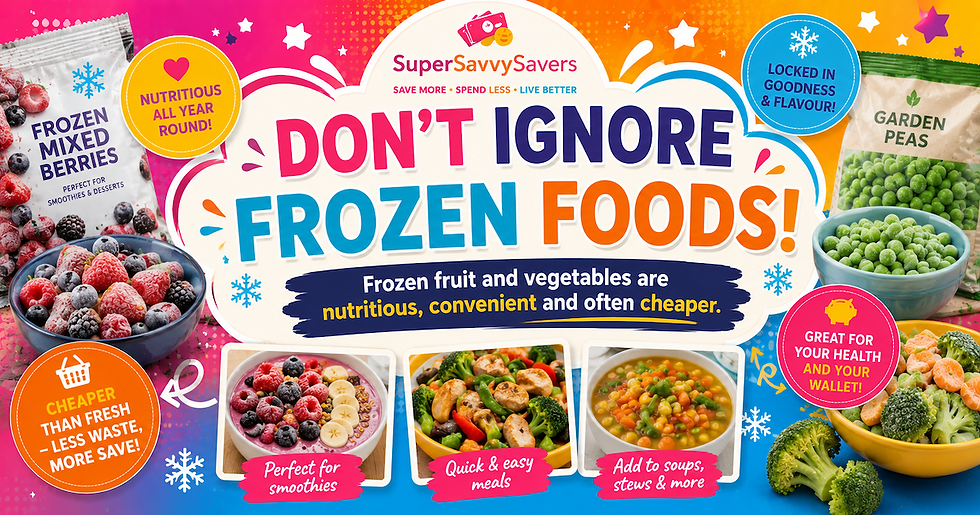
17. Don't Ignore Frozen Foods
Frozen fruit and vegetables are nutritious, convenient and often cheaper.
18. Buy Seasonal Produce
Fruit and vegetables in season are usually more affordable.
19. Use Every Part of Ingredients
Vegetable peelings can become stock, and stale bread can become breadcrumbs.
20. Learn a Few Budget Recipes
Having a handful of cheap family favourites makes meal planning easier. You can find lots of low budget and money saving recipes here - SuperSavvy Recipes

21. Avoid Convenience Foods
Pre-prepared ingredients often cost much more than making them yourself.
22. Grate Your Own Cheese
Blocks of cheese usually offer better value than pre-grated versions.
23. Make Packed Lunches
Homemade lunches can save hundreds of pounds over the course of a year. And it doesn't have to be a sandwich every day, there are lots of great ideas for the office lunchbox.
Or if you need some tips for the kids school lunchbow, we have heaps of ideas over in our blog - Low Budget Healthy School Lunchbox Ideas

24. Buy Larger Packs
Only when they'll be used before they expire.
25. Split Bulk Buys
Share multipack offers with friends or family.
26. Don't just Stick to One Supermarket
Shopping at one supermarket can save time and help reduce impulse spending. However, if you have the flexibility to shop around, using two or three different supermarkets can really pay off.
You don't need to visit multiple stores every week. Instead, get to know which supermarkets offer the best value on the items you buy most often – whether that's tinned goods, fresh fruit and vegetables, meat, cereals or lunchbox favourites. Then, when you're running low on something, you'll know exactly where to head for the best price. 👍
Check out the 10+ Supermarket Items that are Always on Offer!

27. Avoid Multi-Buy Traps
Only buy "2 for £5" or "3 for £12" deals if you genuinely need all items in the offer, or if you have the space in your freezer.
28. Shop Less Often
Fewer shopping trips usually mean fewer opportunities for impulse buys and those little extras that quickly add up. Of course, if you're a Super Savvy Saver who sticks to a shopping list and shops with intention, you might be the exception! 😉
29. Keep an Eye on Unit Prices
The cheapest item on the shelf isn't always the best bargain. While one product might have a lower price tag, it could actually work out more expensive when you compare the price per 100g, kilogram or litre.
Unit prices, usually displayed on the shelf label beneath the main price, make it much easier to compare products of different sizes and brands. For example, a larger pack may cost more upfront but offer better value overall, while a special offer isn't always as "special" as it seems.

30. Use a Basket Instead of a Trolley
If you know you only need a few items, pick up a basket instead of taking the trolley! You'll be more selective with what you pick up.
31. Grow Your Own Herbs
Fresh herbs can be surprisingly expensive, especially when you only need a small amount and the rest ends up in the bin. If you have a sunny windowsill, growing your own herbs is a great way to save money and always have fresh flavours to hand.
But if you're short on space – or simply can't be bothered with the upkeep – frozen herbs are a fantastic alternative. We love the Waitrose Cooks' Ingredients frozen herb range. They might be one of the few convenience products we happily buy, but they're worth every penny in our opinion. They save time, reduce waste and can be sprinkled straight from the freezer into your cooking whenever you need them.

32. Make Your Own Snacks
Homemade flapjacks, muffins and popcorn can save money.
33. Use Store Cupboard Staples
Rice, pasta, oats and tinned tomatoes form the basis of many affordable meals.

34. Buy Dried Pulses
They're often cheaper than canned versions.
35. Stretch Meals
Add extra vegetables, lentils or beans to dishes to make them go further.
36. Make Soup
Soup is a fantastic way to use up odds and ends. Check out our Carrot & Lentil Soup Recipe.

37. Portion Control
Cooking appropriate portions reduces waste.
38. Freeze Excess Bread
You can easily toast bread for a quick snack straight from frozen when needed. Or freeze those end crusts (or heels) to use as breadcrumbs in a future recipe such as a stuffing mix.
Or if you've bought a fresh baguette and not used it all, don't throw it out... freeze it and make a garlic bread, here's how - Homemade Garlic Bread

39. Keep a "Use Me First" Box
Designate a space in your fridge for foods nearing their expiry date.
40. Organise Your Freezer
Label containers and rotate older items to the front. Organise your freezer with baskets.
41. Review Your Favourite Brands
Are there cheaper alternatives you enjoy just as much?
42. Limit Food Deliveries
Takeaways and delivery charges quickly add up. Try making your own Fakeaways instead!

43. Embrace Breakfast for Dinner
Eggs, toast and pancakes can make affordable evening meals... don't save the bacon for breakfast! 🍳
44. Make Your Own Pizza
Homemade versions are often cheaper and healthier. They also double up as a fun family activity. And if you have a fussy eater... they get to make their own and choose whatever they want! Here's our own Homemade Pizza Recipe.

45. Avoid Shopping as Entertainment
Browsing for fun can be expensive.
46. Get the Family Involved
Children are more likely to eat meals they've helped choose or prepare.
47. Use Recipe Websites for Inspiration
Search for recipes using ingredients you already have or better still... ingredients that you've bought reduced (yellow stickers) from your local supermarket. Here's our recommended recipe websites with suggestions of how to use up your yellow stickers or items that you already have in your fridge - Yellow Sticker Recipes.

48. Challenge Yourself
Set a weekly grocery target and see if you can beat it.
49. Keep Track of Savings
Seeing how much you've saved can be hugely motivating.

50. Focus on Progress, Not Perfection
You don't have to do all 50 tips at once. Even adopting a few can make a noticeable difference.
Final Thoughts
Saving money on food shopping isn't about deprivation, it's about making smarter choices that work for your family and lifestyle.
Start small. Pick three or four tips from this list and put them into practice this week. You might be surprised how quickly the savings add up.
And remember, every pound saved on your grocery bill is money that can go towards your savings goals, paying off debt, family treats, or simply giving you a little more breathing space in your budget.
Have fun!



My younger sibling suggested I check out JokersAce Casino after seeing how emotionally drained I was from a messy divorce and the endless, exhausting legal discussions. One rainy night when my thoughts were spinning completely out of control and I couldn't sleep, I decided to give it a try on my personal laptop. I was so relieved to find a professional, silent, and beautifully organized interface that didn't bombard me with flashing warning signs or loud banners. I wrapped myself in a blanket, sank into my armchair, and felt a wave of relief wash over me as the clean, stable pages loaded instantly. It was exactly the quiet, stress-free distraction my exhausted brain needed to finally stop overthinking and get…